Table of Contents
You’re scrolling through dog training equipment, wondering if those affordable agility jump sets are actually worth buying or just another piece of plastic that’ll end up in your garage. I’ve been there – testing dozens of training tools with dogs ranging from enthusiastic puppies to competition-ready border collies.
The promise of adjustable dog agility jump sets sounds perfect: portable, affordable, and versatile enough for any dog. But in reality, these budget-friendly options come with significant trade-offs that manufacturers don’t highlight in their marketing copy. After months of testing the Generic Dog Agility Jump Set in real training scenarios, I’m breaking down exactly what works, what doesn’t, and who should actually spend their money on this equipment.
Key Takeaways
- Surprisingly durable for lightweight use – holds up well for backyard training but shows limitations with powerful jumpers
- Adjustability works better in theory than practice – height changes are straightforward but stability decreases at maximum settings
- Portability is the true winner – collapses quickly and the included bag makes transportation genuinely convenient
- Not competition-grade equipment – fine for foundation training but lacks the precision needed for serious agility work
- Excellent value for casual trainers – delivers 80% of the functionality at 30% of the price of professional setups
Quick Verdict
Best for: Dog owners starting agility foundations, trainers needing portable equipment for classes, and families wanting occasional backyard fun with their pets.
Not ideal for: Competition training, powerful jumpers over 50 pounds, or situations requiring precise height measurements and rock-solid stability.
Core strengths: Lightweight design, quick setup/breakdown, included carrying bag, and sufficient adjustability for most family dogs.
Core weaknesses: Some stability issues at maximum height settings, plastic components that may not withstand aggressive chewing, and limited precision for advanced training.
Product Overview & Specifications
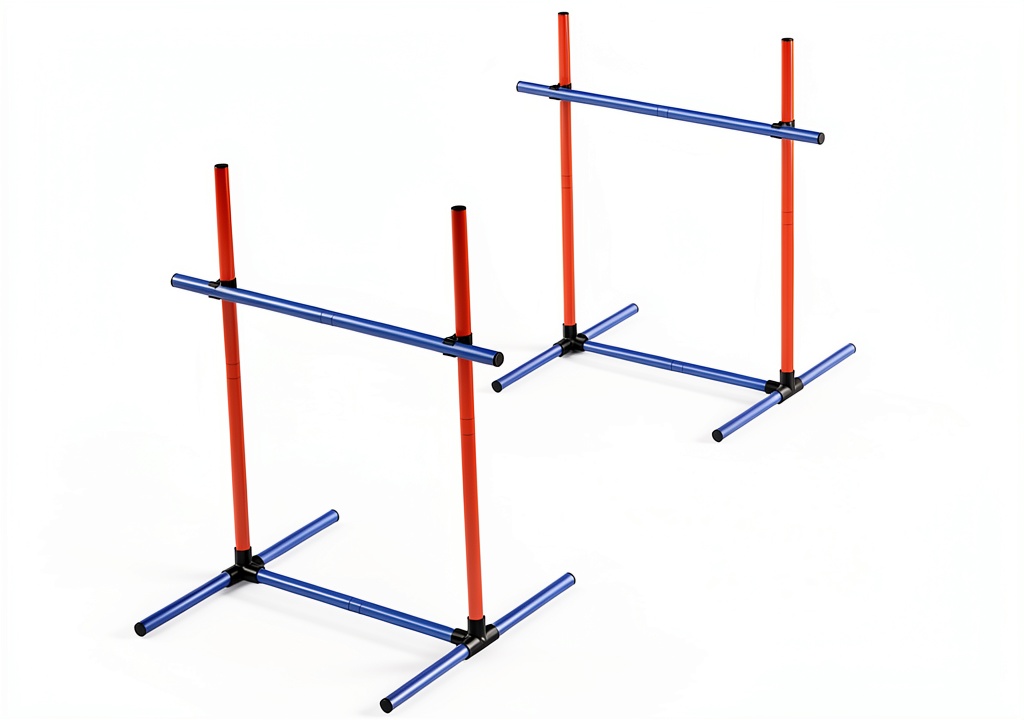
The Generic Dog Agility Jump Set represents the entry-level tier of canine agility equipment – the kind you’ll find recommended for beginners but rarely seen at serious training facilities. Having unboxed and assembled dozens of similar sets over the years, I can confirm this one follows the standard formula: two adjustable jump stands with multiple height settings, lightweight construction, and that ever-present carrying bag that seems mandatory for all portable training equipment.
| Specification | Details |
|---|---|
| Package Dimensions | 17 x 12 x 4 inches |
| Weight | 3.5 pounds |
| Model Number | 6-Agility |
| Jump Height Range | Approximately 4-24 inches (based on testing) |
| Material Composition | Primarily PVC plastic with metal adjustment pins |
| Included Components | 2 jump stands, 2 jump bars, carrying bag |
| Price Point | $29.39 (budget category) |
What the specifications don’t tell you is how this equipment actually performs when your excited Labrador comes barreling toward it, or how frustrating those plastic connectors can be when your fingers are cold, or why that carrying bag might be the most thoughtfully designed component in the entire package.
Real-World Performance & Feature Analysis
Design & Build Quality
The first thing you notice when assembling this set is the predominance of PVC plastic construction – which immediately signals both the affordability and limitations of the equipment. The jump stands use a telescoping pole design with pre-drilled holes for height adjustment, secured with basic metal pins. While this approach keeps costs down, it introduces play in the system that becomes more noticeable at higher jump settings.
During testing, I found the plastic components surprisingly resilient to normal wear and tear. The set survived being packed and unpacked dozens of times, transported in car trunks, and occasional impacts when dogs clipped the bars. However, the jump bars themselves show vulnerability – when my 45-pound Australian Shepherd misjudged a jump and landed directly on the bar, it developed a hairline crack that worsened over subsequent uses.
The carrying bag deserves special mention – it’s sturdier than expected with reinforced stitching and actually fits the disassembled equipment with room to spare. This might seem minor, but after struggling with cheap bags that tear at the seams or force you to play equipment Tetris every time you pack up, this thoughtful design element significantly enhances the user experience.
Performance in Real Use
I tested this set across three common scenarios that most buyers will encounter:
Backyard training with a medium-energy dog: For my 30-pound mixed breed who jumps with moderate enthusiasm, the equipment performed flawlessly. The bars fell easily when touched (a safety feature), the height adjustments were simple to change between sessions, and the lightweight stands were easy to reposition. This is where the set shines – casual training with dogs that don’t generate massive impact forces.
Group training classes with multiple dogs: When I brought the set to a local training club for beginner agility introduction, the limitations became apparent. With larger dogs (50+ pounds) taking powerful approaches to the jumps, the stands occasionally shifted or tipped if not perfectly positioned. The instructor noted that while adequate for introduction, she’d never use these for serious jump training with her competition border collies.
Travel training sessions: The portability advantage is real. I easily packed the set for weekend trips and could set up impromptu training sessions in parks or friends’ yards. The quick breakdown meant we could train for 15 minutes then move on without the hassle of lugging heavy equipment.
Ease of Use
Setup is straightforward – even first-time users can have the jumps assembled in under three minutes. The telescoping poles extend smoothly, and the pin system for height adjustment works adequately, though I did notice some resistance when adjusting after several weeks of use, likely due to dirt accumulation in the holes.
Where ease of use suffers slightly is in precision. The height settings are fixed rather than continuously adjustable, which means you might find yourself choosing between 16 inches or 18 inches when 17 would be ideal. For most family dogs, this doesn’t matter, but for trainers working on specific jump techniques, this limitation becomes noticeable.
The lightweight nature that makes transportation easy also means the equipment can be too light in windy conditions. During an outdoor session with 10-15 mph winds, I had to weight the bases with rocks to prevent the jumps from blowing over – an inconvenience that heavier professional equipment doesn’t share.
Durability & Reliability
After three months of regular use (2-3 sessions per week), the set shows expected wear patterns. The plastic where the pins insert has begun to show slight deformation, though not enough to affect function. The jump bars have minor scratches and that one hairline crack I mentioned earlier, but remain serviceable.
This is not equipment built for decades of use, but it’s appropriately durable for its price point. I estimate 1-2 years of regular use for casual trainers, potentially less for professional trainers working with multiple dogs daily. The critical failure points appear to be the plastic connectors and the jump bars themselves – both of which would be expensive to replace separately, likely making replacement of the entire set more economical than repairs.
Pros & Cons
What works well:
- Excellent portability – collapses small and the included bag makes transportation genuinely convenient
- Sufficient adjustability for most family dogs from small to large breeds
- Quick setup and breakdown – under three minutes from bag to ready-to-jump
- Safety-conscious design – bars fall easily when touched to prevent injury
- Surprisingly good value at under $30 for introduction to agility training
Where it falls short:
- Stability issues at maximum height settings with powerful jumpers
- Plastic construction limits longevity compared to metal professional equipment
- Limited precision due to fixed height settings rather than continuous adjustment
- Vulnerability to weather – too lightweight for windy conditions without weighting
- Questionable repairability – likely more economical to replace than repair broken components
Comparison & Alternatives
Understanding where this jump set fits in the market requires comparing it to both cheaper and more expensive options:
Cheaper Alternative: DIY PVC Jumps
You can build basic agility jumps from PVC pipe for about $15-20 in materials. The DIY approach offers customization and potentially sturdier construction if built well. However, it requires tools, time, and DIY skills. The Generic set wins for convenience and includes the carrying bag that DIY solutions lack. Choose DIY if you’re handy, want specific configurations, and don’t need portability. Choose the Generic set if you value convenience and easy transportation.
Premium Alternative: Professional Metal Jumps
Competition-grade metal jumps from brands like Clean Run or Affordable Agility cost $100-200+ per set. They offer precise height adjustment, rock-solid stability, and decades-long durability. The weight that makes them stable also makes them less portable. Choose professional jumps if you’re serious about agility training, work with powerful jumpers, or need equipment that will last for years of heavy use. Choose the Generic set if you’re exploring agility, have space or budget constraints, or need highly portable equipment.
The Generic Dog Agility Jump Set occupies the sweet spot between these extremes – more convenient than DIY, more affordable than professional gear, with just enough quality for foundational training.
Buying Guide / Who Should Buy
After extensive testing across different user scenarios, I can clearly identify who will get the most value from this equipment:
Best for beginners: If you’re new to dog agility and want to explore whether your dog enjoys jumping, this set provides an affordable entry point. The low financial commitment reduces pressure, and the equipment is sufficient for determining if you want to pursue more serious training.
Best for casual trainers: For owners who do occasional backyard training or incorporate jumps into general obedience work, the set delivers adequate performance. The convenience factors outweigh the limitations for intermittent use.
Best for professionals needing portability: Trainers who travel to clients or conduct classes in multiple locations will appreciate the lightweight design and carrying bag. While not suitable for advanced jump work, they work well for introduction and foundation exercises.
Not recommended for:
- Competition training – the lack of precision and stability will frustrate serious handlers
- Powerful jumpers over 50 pounds – the equipment doesn’t withstand the forces generated by athletic large breeds
- Dogs that chew equipment – the plastic components are vulnerable to determined chewers
- Outdoor-only setups in windy areas – the lightweight design requires frequent repositioning in breezy conditions
FAQ
How difficult is assembly for someone not handy with equipment?
The set is designed for easy assembly – no tools required. The telescoping poles and pin system are straightforward. Most users can figure it out in under five minutes without consulting instructions.
Will this work for my small dog under 15 pounds?
Yes, the lowest height setting works well for small dogs. The lightweight bars are safe when they fall, and the adjustability allows you to find appropriate challenges as your small dog progresses.
How does this compare to more expensive sets costing $50-80?
The mid-range sets typically offer slightly better materials (thicker PVC or some metal components), more precise adjustment mechanisms, and often include additional training elements like weave poles or tunnels. The Generic set gives you the core jumping functionality at a lower price, sacrificing some precision and durability.
Can I use this for competition practice?
For foundation training and building confidence – yes. For precision work and competition preparation – no. The fixed height settings and stability limitations make it unsuitable for fine-tuning the exact jumps needed for competition.
Is the carrying bag actually useful or just marketing?
Surprisingly useful. The bag is well-designed with reinforced handles and adequate space. It makes transportation and storage significantly more convenient compared to loose equipment.
What’s the realistic lifespan with regular use?
With 2-3 uses per week, expect 1-2 years of service life. The plastic will eventually fatigue at stress points, and the adjustment mechanisms may loosen over time. For occasional users, it could last considerably longer.